Northeastern Fireplace & Design: Fireplace Insert Installation in Kingston NY

At Northeastern Fireplace & Design, we help Kingston homeowners transform drafty, outdated fireplaces into powerful heating systems with our gas, pellet, and wood fireplace insert installations. Our team handles everything from sizing and fuel selection to venting, finishing, and final testing so your new insert heats your home as efficiently as possible while adding beauty and comfort to your living space. Whether you want quick-start convenience, the charm of real wood, or the steady burn of pellets, we guide you through every step to make sure your fireplace insert upgrade fits your home, your lifestyle, and Kingston’s cold-weather demands.


What Is a Fireplace Insert & Why Do Homeowners in Kingston Choose One?

A fireplace insert is a self-contained firebox that we install directly into your existing masonry fireplace to improve heating performance while keeping the charm of a real flame. We install gas, pellet, and wood inserts, and each fuel type brings its own advantages depending on how you like to heat your home.

Homeowners in Kingston often choose inserts because they want:

  • Better heating performance than an open fireplace
  • Lower fuel waste and more consistent room temperatures
  • A cleaner burn with less smoke in the living space
  • Modern controls such as remote thermostats or automatic pellet-feed systems
  • A beautiful, updated look without tearing out the entire fireplace

Inserts help you heat your home as efficiently as possible, while also creating a safer and more controlled burn. From the first consultation to the final test burn, our company handles every step so your new appliance runs correctly, vents properly, and supports both comfort and home value.
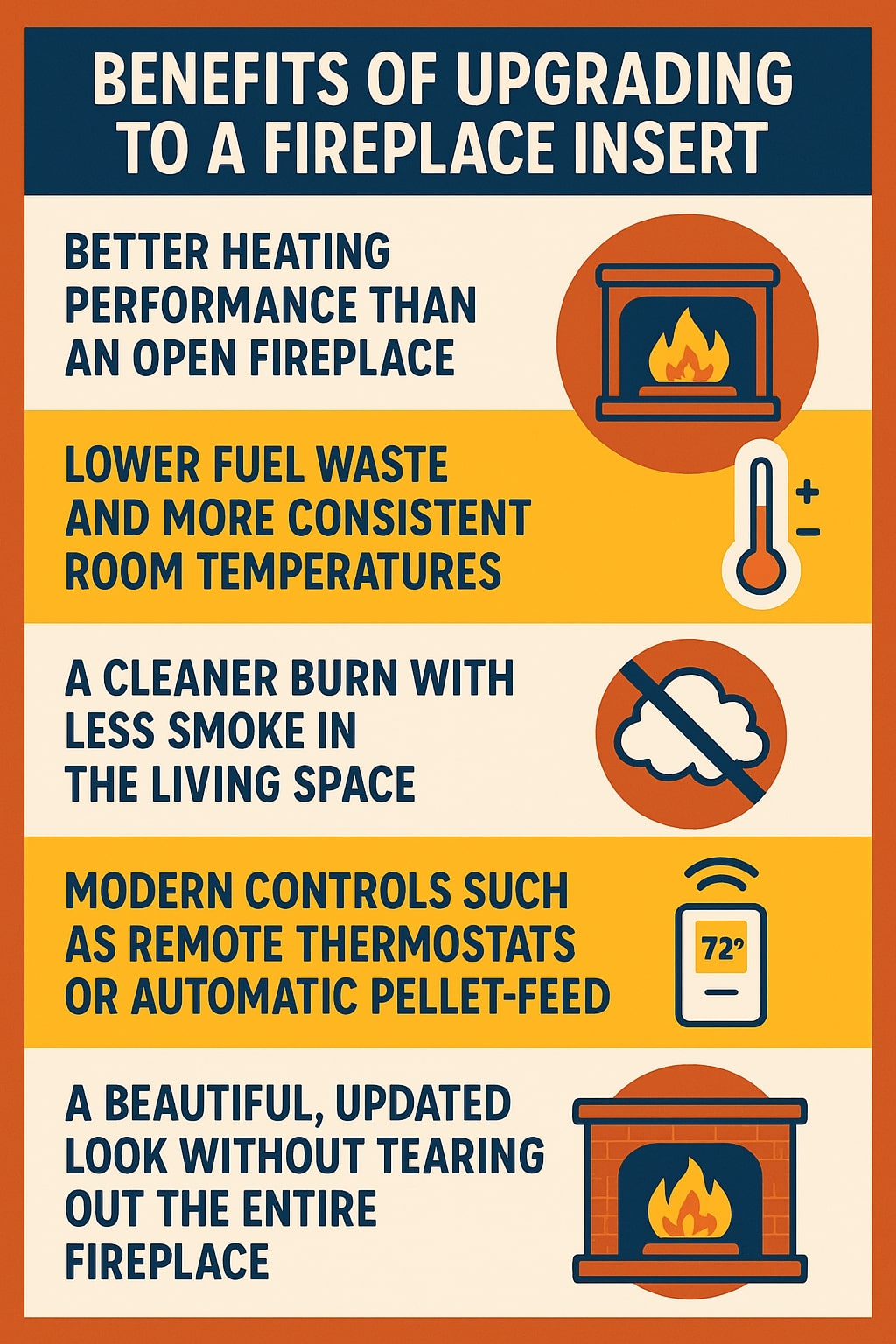
original infographic showing a vertically stacked design with alternating cream and golden-yellow background sections framed by a thick orange border, titled “Benefits of Upgrading to a Fireplace Insert” in bold white text on a navy-blue header; each benefit is listed in large dark-blue lettering alongside simple flat-style icons, including an orange circle containing a navy fireplace with a yellow flame, a red thermometer with plus and minus signs, an orange circle with a cloud crossed out, a smartphone-style thermostat reading “72°” with wireless signal lines, and finally another orange circle with a brick fireplace and flame; the overall palette uses navy, orange, cream, and yellow tones, with clean sans-serif text and evenly spaced rectangular sections.

Kingston NY: A Hudson River Community We’re Proud to Serve

Kingston is full of character, history, and natural beauty. Homeowners here enjoy the peaceful waterfront atmosphere, the charm of the Stockade District, and the scenic trails along the Catskills. On weekends, families stroll through Forsyth Park, explore local museums, or enjoy the vibrant restaurants downtown. This is a community that values comfort at home as much as adventure outside, which is why a well installed fireplace insert is such a popular upgrade. We love helping Kingston homeowners enjoy warmer winters and more stylish living spaces.

How Do I Choose Between Gas, Pellet, and Wood Fireplace Inserts?

When we help homeowners choose an insert, we focus on lifestyle, long-term maintenance, and the kind of fire experience they want. Each fuel type has strengths, and the right choice depends on how you intend to use your fireplace.

Gas Inserts

Gas inserts are chosen for convenience. You get steady heat with the push of a button, and there’s no need to store or haul fuel. Remote controls and thermostatic settings let you fine-tune heat output so rooms stay comfortable throughout the day. Some models offer adjustable flame heights, ember beds, and lighting effects that create a beautiful, natural-looking fire. Gas also reduces cleanup since there’s no ash and very little residue. For busy families in Kingston or homeowners who want instant warmth without any prep, gas is a strong option.

A gas insert still needs correct venting, precise installation, and proper gas-line work to perform as designed. Draft can also change over time if nearby construction or new roofs alter exterior airflow patterns. When we install your gas insert, we check all potential draft influences around the home to make sure your appliance vents as consistently as possible.

Pellet Inserts

Pellet inserts appeal to homeowners who want the ambiance of a real flame with a hands-off feeding system. Pellets burn clean and steady, and the built-in hopper meters fuel as needed. Many Kingston homeowners appreciate the predictable, even heat output these appliances produce. They’re a great choice for long winter nights, especially when you want steady warmth without tending a fire every hour.

Pellets do require electricity for the feed system and blowers, so we discuss backup options for storm-prone seasons. After floods or heavy weather, pellet inserts need a safety check before reuse to confirm that motors, ignition components, and venting passages haven’t absorbed moisture. When maintained properly and swept regularly, pellet inserts offer a long-lasting, reliable heating experience.

Wood Inserts

Wood inserts deliver the most traditional fire experience. Many homeowners around Kingston enjoy sourcing local firewood, managing the burn, and enjoying the aroma and ambiance only real wood can provide. Wood inserts can heat large areas as efficiently as possible when paired with seasoned firewood and a well-maintained flue.

Because wood burning can be impacted by windstorms, freeze-thaw cycles, and rising creosote levels, we emphasize annual inspections. A single missed season can allow enough creosote to accumulate to create a chimney fire hazard later. Wood smoke draft can also be affected if nearby trees grow high enough to alter airflow or if the chimney’s masonry shifts during a harsh winter. We check these variables during installation and each follow-up service to help you burn as safely as you can.

What Structural & Draft Issues Should Homeowners Consider Before Installing an Insert?

A fireplace insert relies on correct draft, stable masonry, and a properly sized liner to perform well. Kingston’s climate introduces some unique factors, including freeze-thaw cycles that can loosen mortar joints, storms that shift exterior airflow, and historic homes with older, unlined chimneys.

We often see homeowners surprised by how many conditions can influence draft:

  • Seismic tremors loosening mortar joints enough to create interior gaps
  • Crumbling mortar accelerating in just one season, weakening the chimney’s ability to support a liner
  • Leaning or cracking masonry that signals partial collapse risk
  • Trees or new additions changing roofline aerodynamics
  • Moisture after heavy rain creating a damp flue that reduces draft on startup

Before installation, we inspect for hidden decay, especially in older chimneys that appear solid but may have interior erosion. We also check for microscopic liner cracks using specialized light and camera systems. Identifying these early ensures your insert has a stable, reliable venting system that supports long-term performance.

How Long Does Installation Take and What Steps Are Involved?

Most fireplace insert installations can be completed in a day once all components are prepared. The process involves:

  • Measuring the existing firebox
  • Selecting and sizing the insert
  • Installing a stainless steel liner
  • Securing the insert and connecting venting
  • Setting up electrical or gas lines if needed
  • Finishing trim and running a full test burn

We also check draft performance under different conditions. For example, strong winds off the Hudson River can backdraft poorly vented chimneys, so we assess exterior pressures and verify cap height as part of our installation.

If your chimney needs repairs before installation, we handle that as well. Things like loose bricks, damaged crowns, or deteriorated liners need to be addressed so your new insert performs as intended.

What Weather or Seasonal Factors Affect Fireplace Insert Performance in Kingston?

Kingston experiences cold winters, wet springs, and occasional high winds. Each of these influences fireplace performance.

  • Freeze/thaw weathering can widen cracks in the masonry, allowing water intrusion that reduces structural integrity and affects draft.
  • Heavy storms can blow leaves and debris into the flue. Spring pollen can accumulate faster than expected and contribute to partial blockages.
  • After hurricanes or flooding events, the chimney system should always be checked before any fire is lit. Hidden moisture inside a flue can create pressure problems, slow ignition, or cause smoke to spill into the living space.
  • In autumn, falling leaves can clog caps or screens and impact pellet and wood systems.

We design your installation with these patterns in mind, selecting the right cap, liner, and draft strategy so your insert performs consistently through Kingston’s changing seasons.

What Happens If I Use My Fireplace Insert When the Flue Is Damp?

Many homeowners are surprised by how significantly moisture affects draft. Lighting a fire in a damp flue cools the initial smoke, slows its upward movement, and can cause smoke to spill back into the room. With wood inserts, damp flues can also produce more creosote early in the burn cycle. Pellet and gas inserts can struggle to establish proper vent flow, triggering safety shutoffs.

We recommend allowing the flue to dry naturally after prolonged rain, or using a top-sealing damper to reduce moisture entry. During installation, we help determine the best way to minimize moisture exposure based on your roofline, chimney height, and prevailing winds.

Ready to Upgrade Your Fireplace? Call Northeastern Fireplace & Design

Our team is here to help you choose the right gas, pellet, or wood fireplace insert and install it with the care, precision, and craftsmanship Kingston homeowners count on. If you’re ready to enjoy better comfort and a more beautiful fire this winter, reach out today to schedule your consultation.